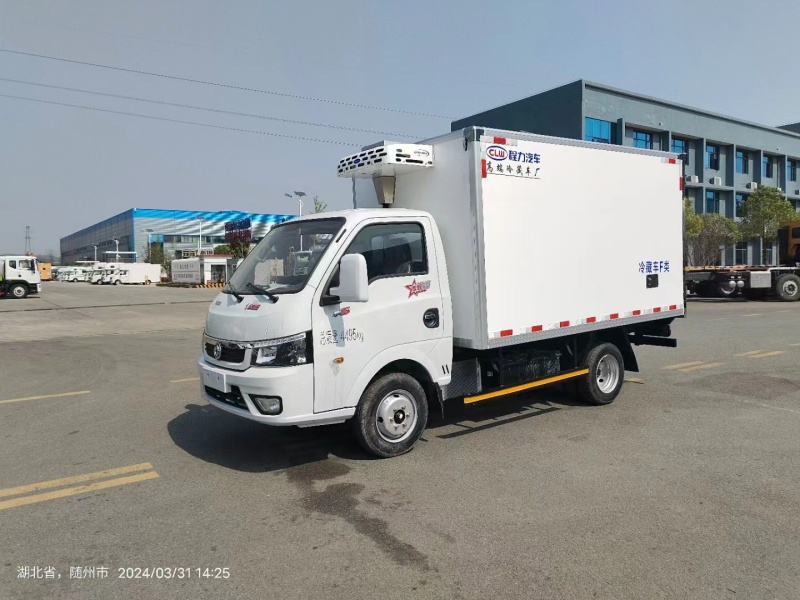
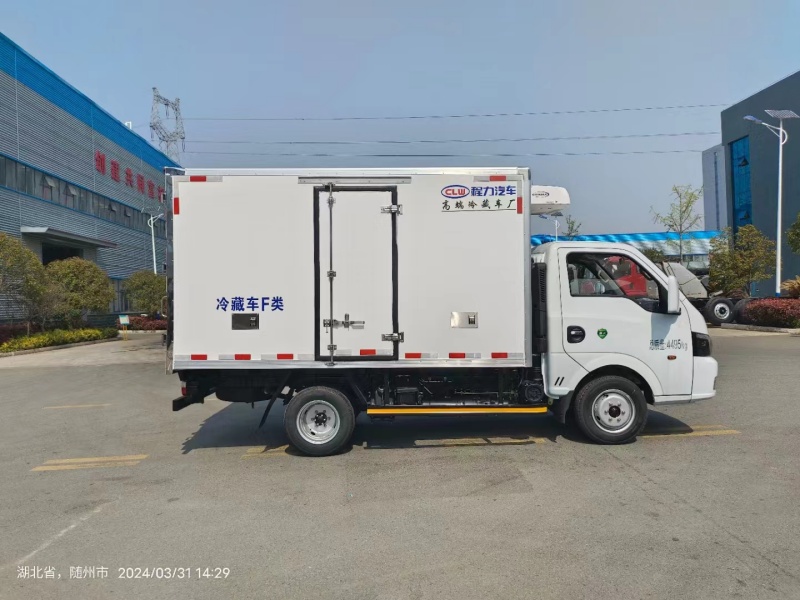
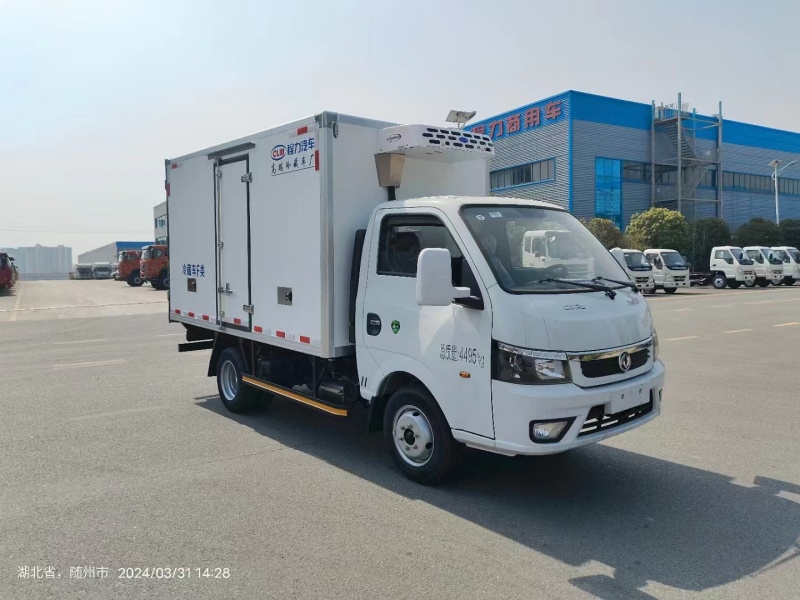
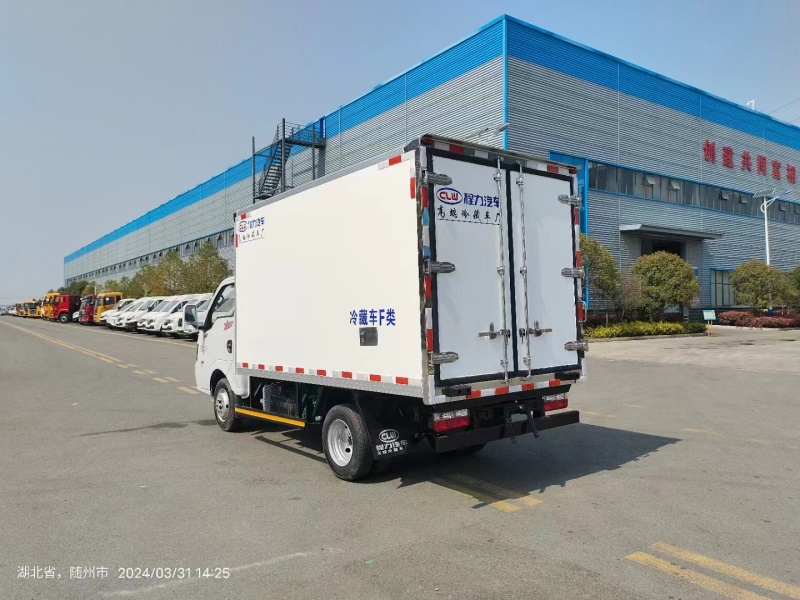
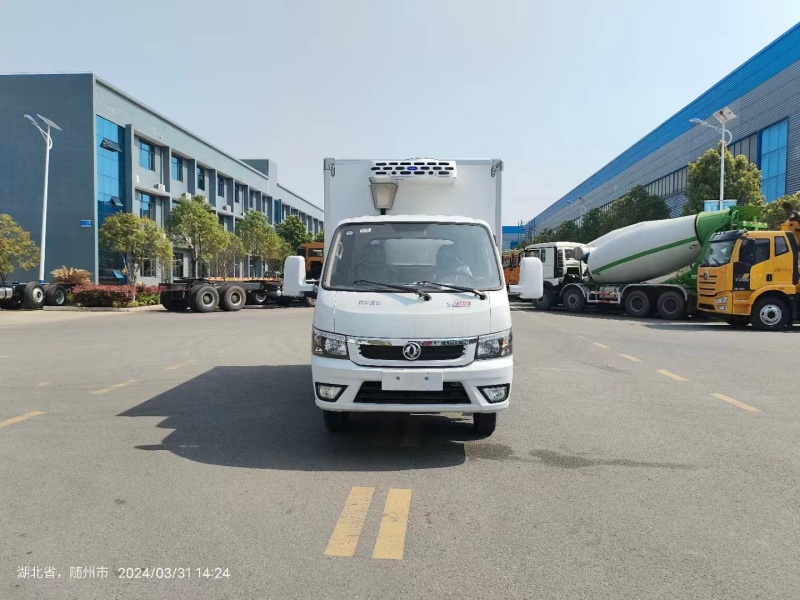
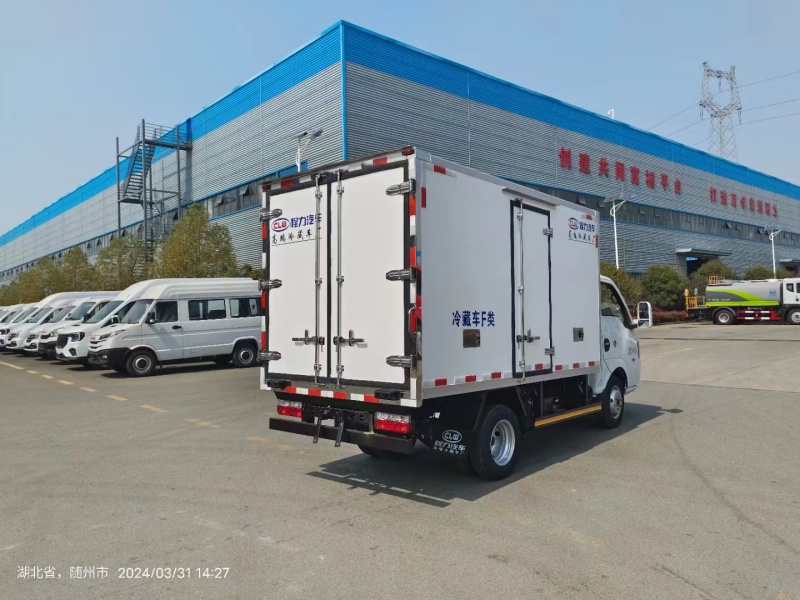
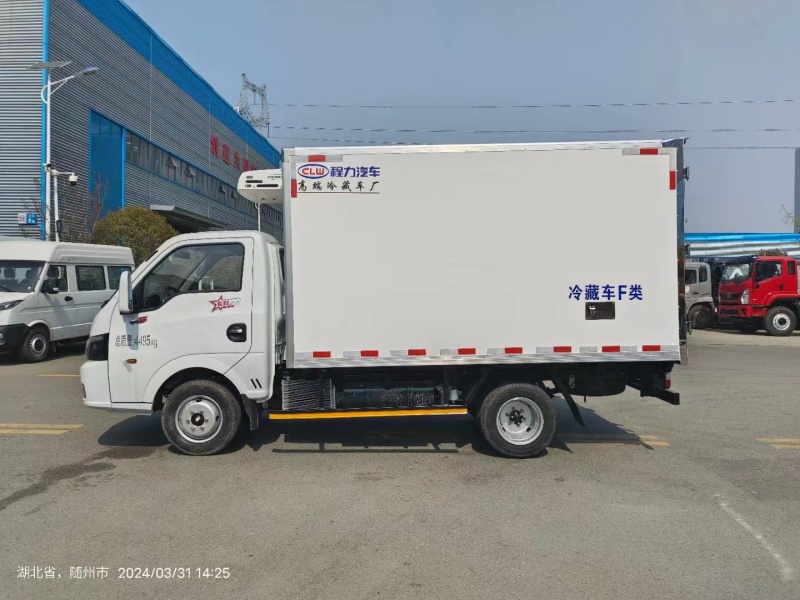
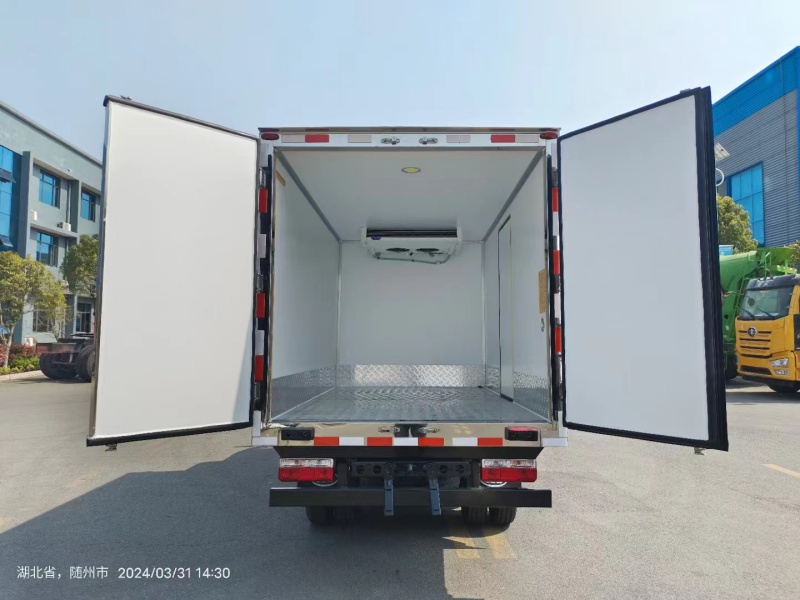
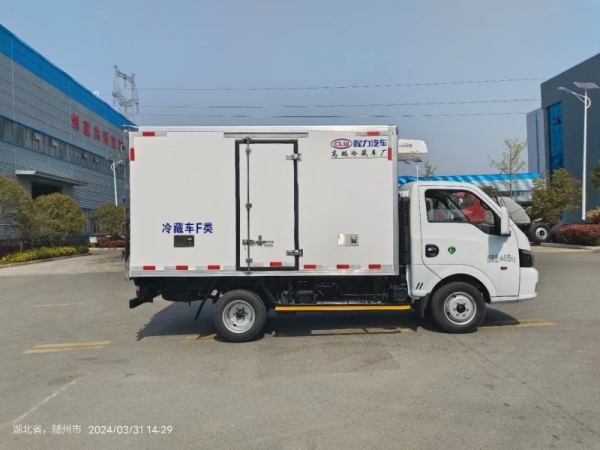
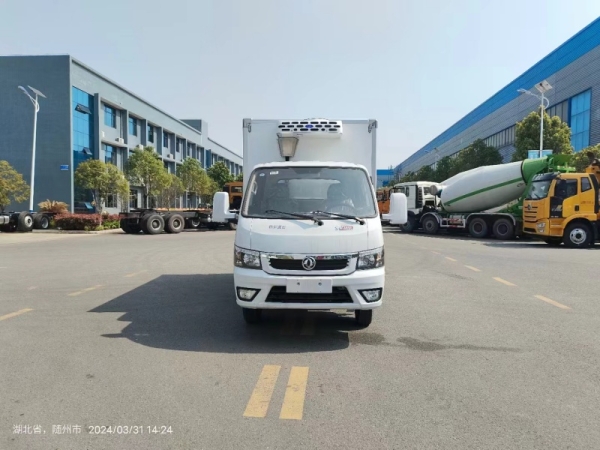
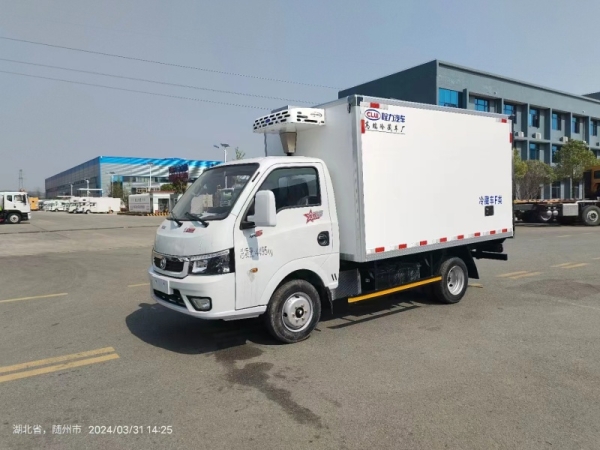
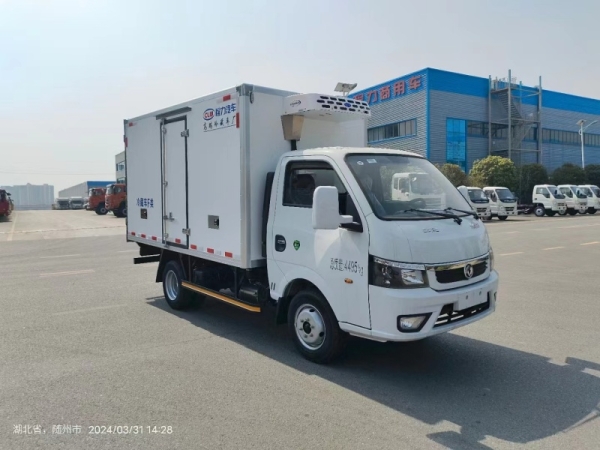
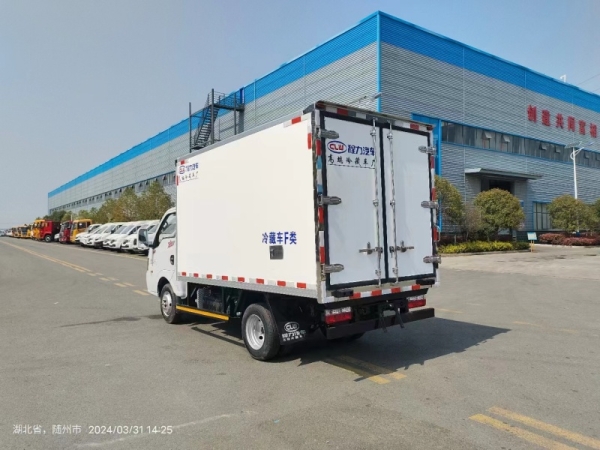
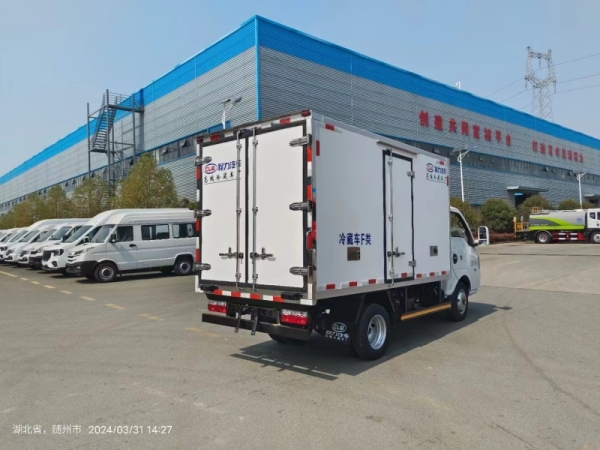
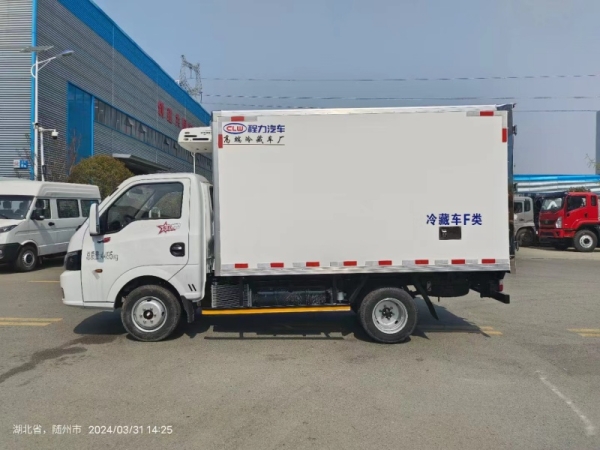
All-diesel 95 HP National six engine, 5 speed gearbox, 1.5 tons /3 tons, 185R15 real empty tires,
Rear twin wheels, power steering, daytime running lights, front disc brakes, central control door locks, electric doors and Windows,
Cruise control, Bluetooth phone, multi-function steering wheel, ABS, air conditioning,
Force extractor window
Wheelbase :2800mm
3.Dongfeng Tuyi refrigerated truck picture
4.Refrigerated truck use
Refrigerated trucks are specialized vehicles designed to transport temperature - sensitive goods while maintaining a specific temperature range. Here are their main uses:
1. Food industry
Fresh produce:
Fruits and vegetables are highly perishable. Refrigerated trucks keep them at optimal temperatures (usually around 0 - 10°C depending on the type of produce) to slow down the ripening process, prevent spoilage, and maintain their freshness, texture, and nutritional value during transit from farms to markets, grocery stores, or food processing facilities.
For example, strawberries need to be transported at around 0 - 2°C to extend their shelf - life from a few days to over a week.
Meat, poultry, and seafood:
These products are prone to bacterial growth. Refrigerated trucks maintain low temperatures (usually below 5°C for fresh meat and poultry, and even lower, around - 18°C for frozen varieties) to inhibit the growth of harmful bacteria like Salmonella and E. coli. Seafood often requires even more precise temperature control, with some delicate fish species being transported at just above freezing point to preserve their quality.
For instance, frozen chicken is typically shipped at - 18°C to keep it in a frozen state and prevent freezer burn.
Dairy products:
Milk, cheese, and yogurt need to be kept cold to prevent spoilage and maintain their taste and texture. Refrigerated trucks ensure that dairy products are transported at temperatures between 2 - 6°C, which helps to extend their shelf - life and keep them safe for consumption.
2. Pharmaceutical industry
Medications and vaccines:
Many pharmaceutical products are temperature - sensitive. Vaccines, in particular, require strict temperature control. For example, some common vaccines need to be stored and transported between 2 - 8°C. Refrigerated trucks are used to maintain these precise temperature ranges during distribution from manufacturing plants to hospitals, clinics, and pharmacies.
Biologics, which are complex drugs derived from living organisms, also often require cold chain transportation to preserve their efficacy and safety.
3. Floral industry
Cut flowers:
Cut flowers are living organisms that continue to respire after being cut. Refrigerated trucks help to slow down their metabolic rate by maintaining a cool temperature (usually around 2 - 5°C), which extends their vase life. This allows flowers to be transported over long distances from flower farms to florists, ensuring that they arrive in good condition.
4. Chemical and industrial uses
Temperature - sensitive chemicals:
Some chemicals can degrade, react, or become unstable at certain temperatures. Refrigerated trucks are used to transport these chemicals at a controlled temperature to prevent any unwanted chemical reactions or changes in their properties. For example, certain types of adhesives, resins, and photographic chemicals may require cool transportation conditions.
CONTACT US
TIips: If you have any questions, please contact us, we will get back to you as soon as possible.